Understanding Light: The #1 Skill for Better Photos
Module 1, lesson 1

Introduction
If there’s one skill that transforms your photos instantly — without buying a new camera or learning complicated techniques — it’s understanding light.
Light shapes everything:
the mood of a photo
how natural the skin looks
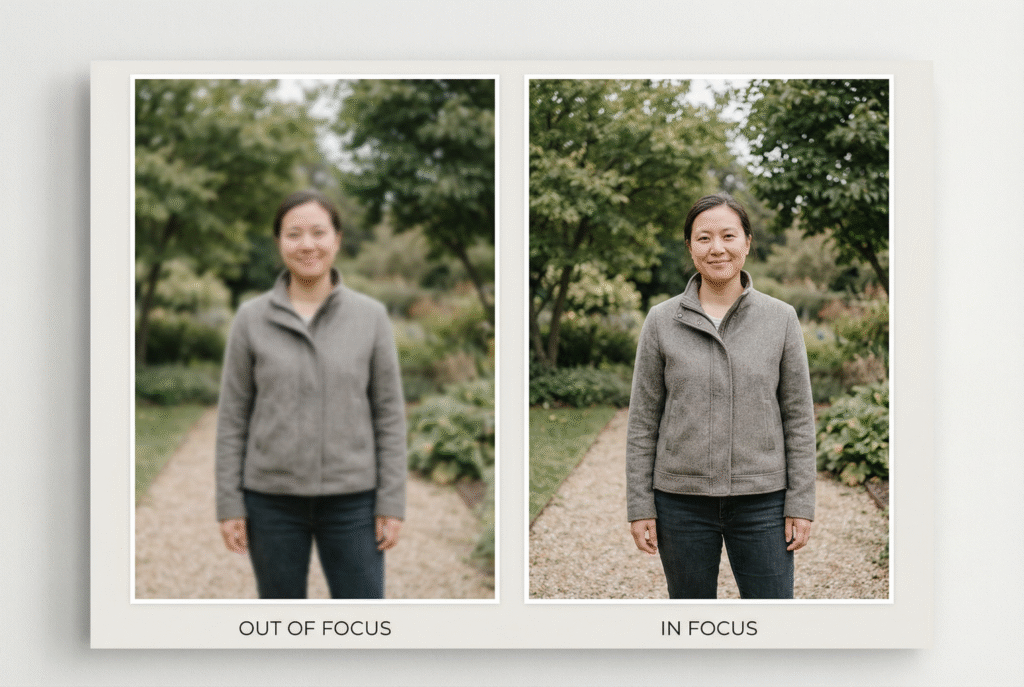
how sharp or blurry the image becomes
whether a merge will look realistic
and most importantly…
whether the photo feels alive
In this lessons, we’ll explore light in a simple, practical way so you can start using it immediately — even with just your phone.
By the end, you’ll see photos differently.
And you’ll take better ones, every single time.
⭐ 1. Light Direction — The Secret Behind Good Portraits
Before anything else, ask:
“Where is the light coming from?”
This one question separates beginners from professionals.
✔ The best light for portraits
Light should come from:
- in front of the person, or
- slightly from the side
This creates:
- clear skin tone
- sharp eye detail
- smooth shadows
- natural expression
✔ The worst light for portraits
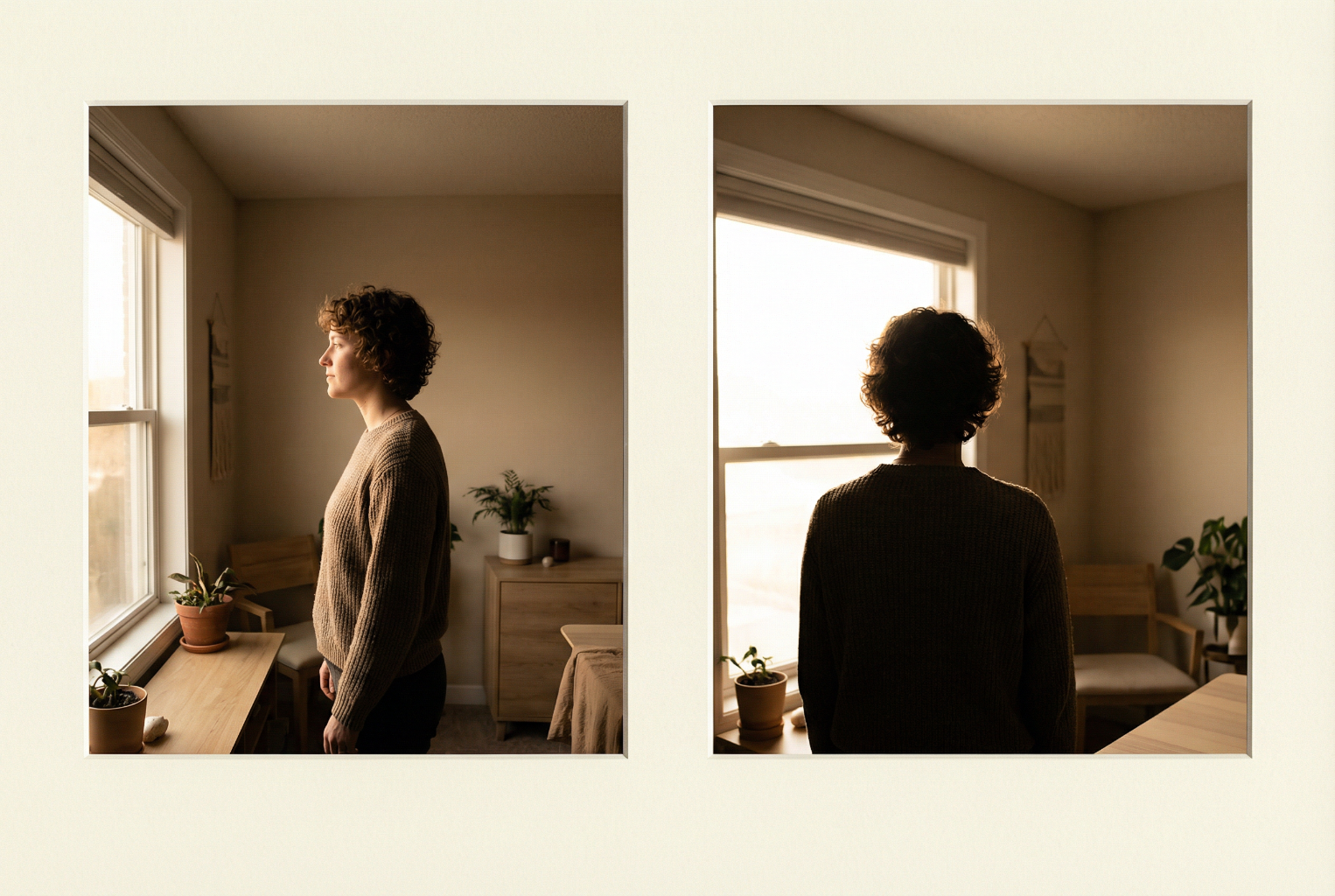
Light from behind the person — unless you’re intentionally shooting a silhouette.
Backlight causes:
- dark faces
- greyish skin
- harsh outlines
- loss of detail
- flat-looking photos
(And for merging, it becomes almost impossible to pair correctly with other images.)
⭐ 2. Soft Light vs Hard Light
✔ Soft light
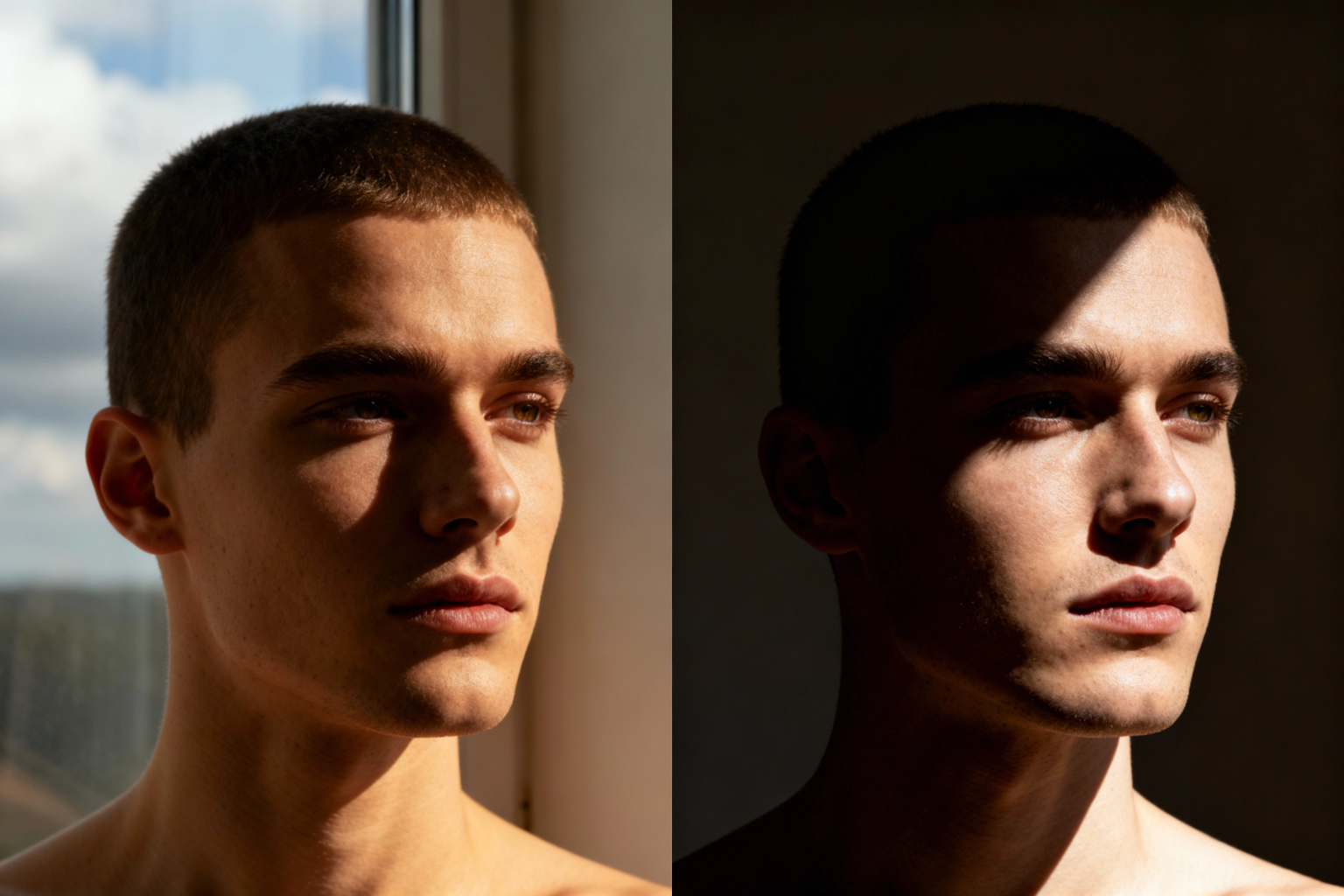
This is what you want 95% of the time.
It’s created by:
- window light
- open shade
- cloudy weather
- diffused lamps
Soft light gives you:
- even skin tones
- gentle shadows
- realistic color
- a flattering look
✔ Hard light
Direct sun, downlights, spotlights.
Results:
- harsh shadows
- shiny skin
- dark eye sockets
- unflattering contrast
- loss of detail
Tip:
If you see shadows that look sharp, the light is too hard.
Move into shade or closer to a window.
⭐ 3. The Window Trick (The Professional Shortcut)
If you remember only one thing from this lesson, let it be this:
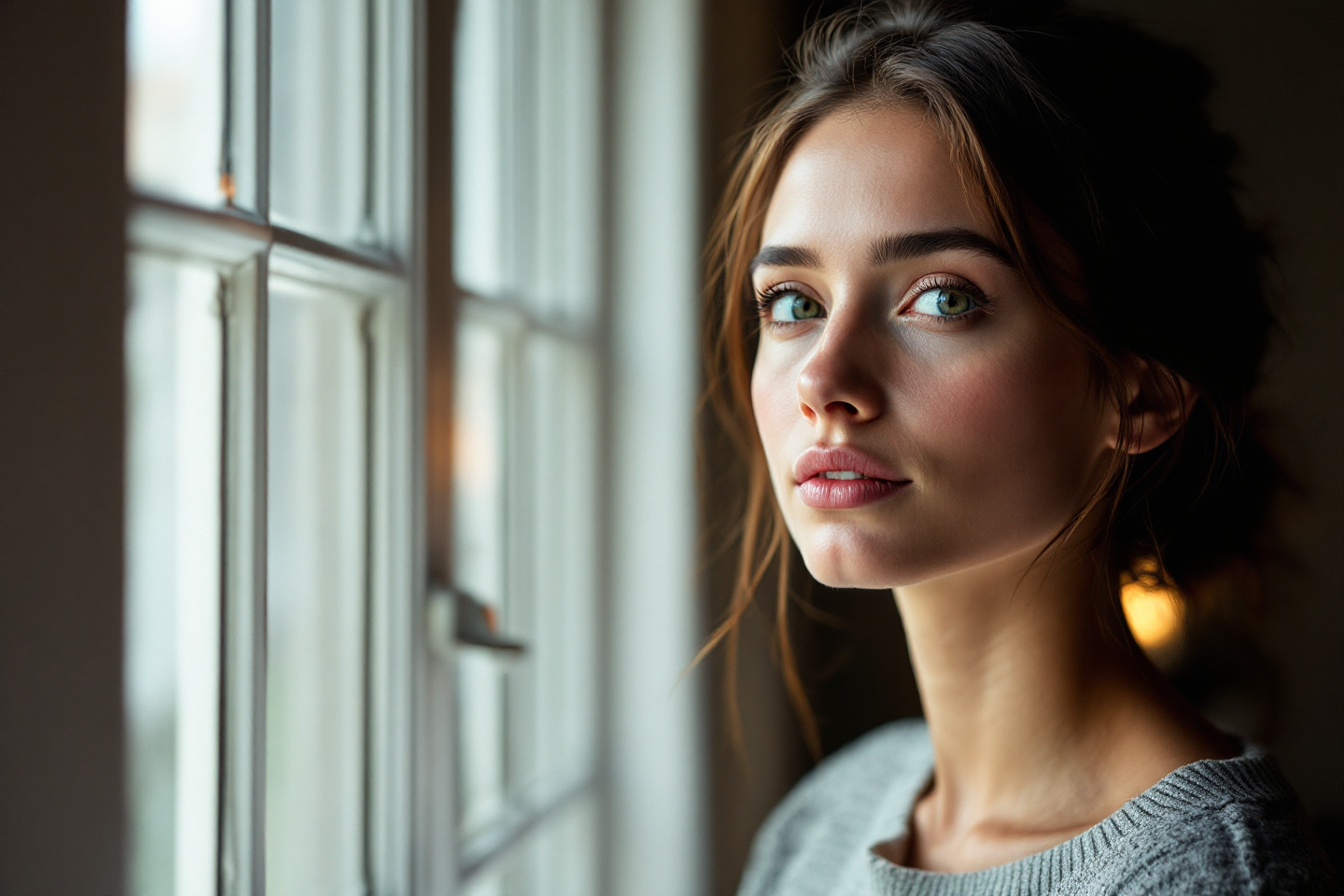
➤ Stand facing a window.
➤ Never put the window behind you.
This simple technique creates studio-quality light at home.
Try it with a selfie:
Turn one way → dull
Turn toward the window → alive
Window light is:
- soft
- flattering
- directional
- stable
- beautifully natural
This is the lighting I always recommend when customers send photos for merging or restoration.
⭐ 4. Light on the Face Should Match the Emotion
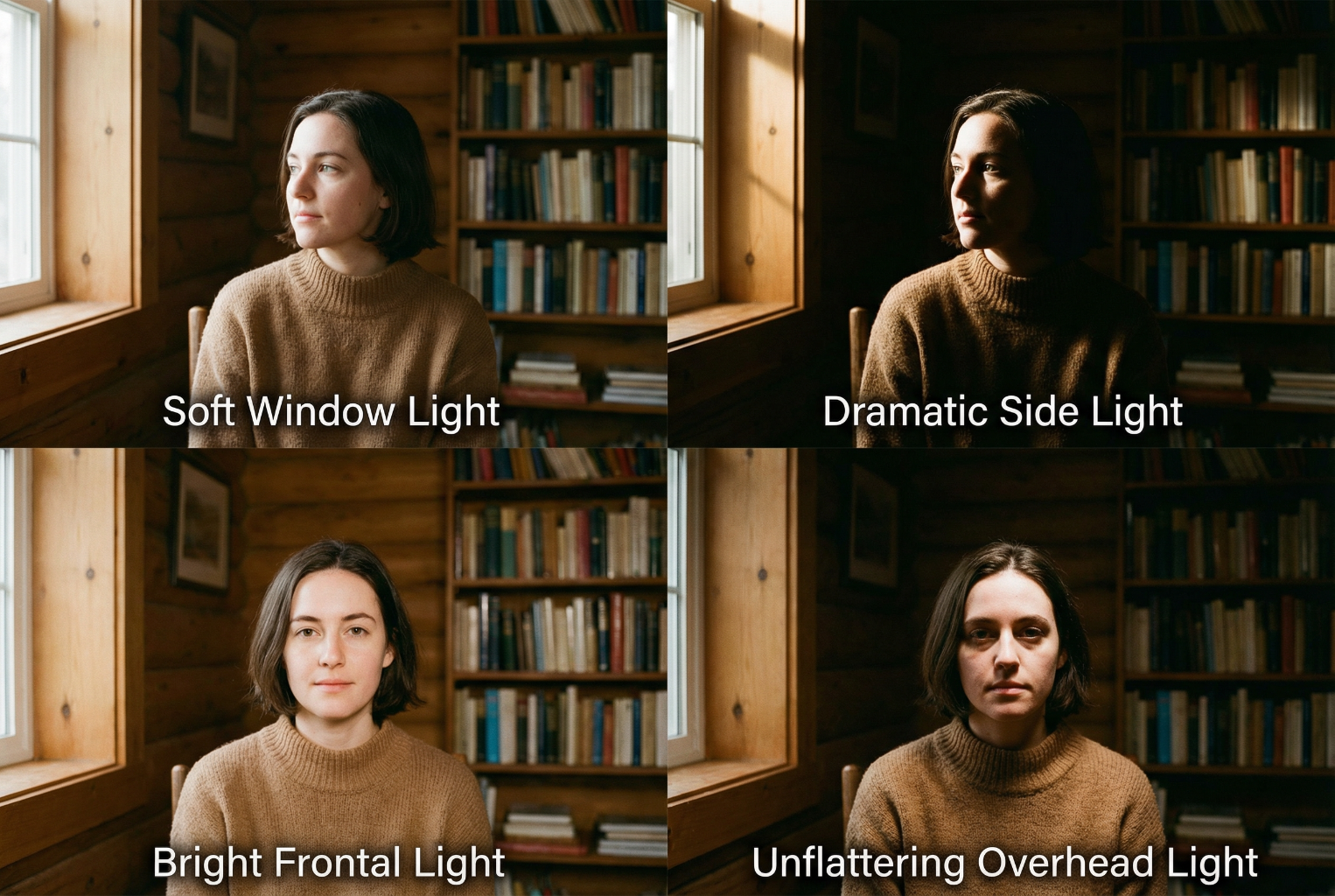
Light affects how a moment feels.
✔ Soft light
Gentle, emotional, natural — perfect for family photos.
✔ Side light
Adds depth and story — perfect for artistic portraits.
✔ Bright front light
Clear, upbeat, modern — great for group photos.
✔ Hard overhead light
Avoid when possible — makes people look tired.
Learning this helps you intentionally choose the feeling of your photo.
⭐ 5. Why Light Matters in Photo Merging
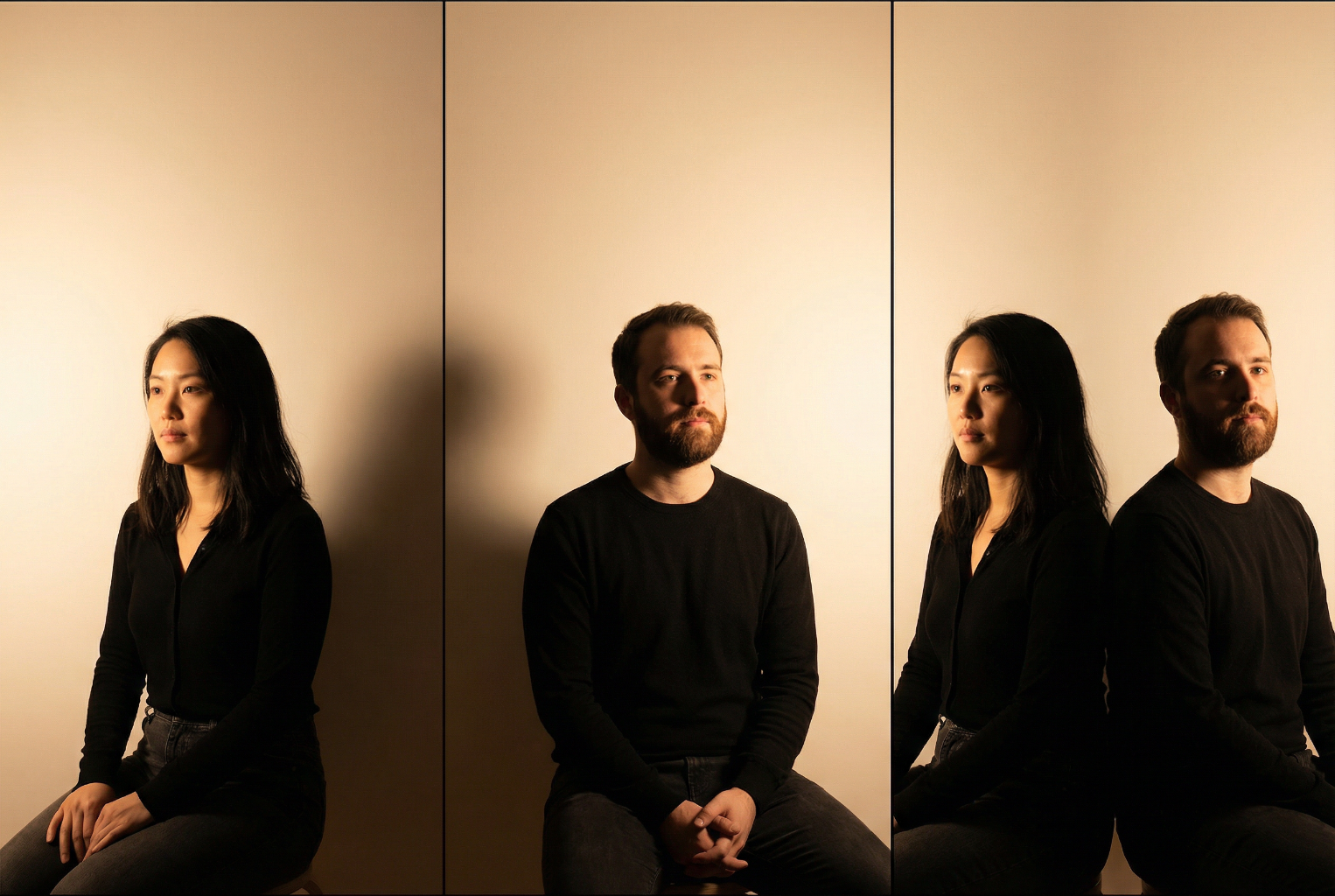
When I merge people from different photos into one, the lighting direction must match.
For example:
- If one person is lit from the left
- And another is lit from the right
- They will never look like they were in the same scene
Even editing can’t fully fix a mismatch in direction.
Good lighting at the moment of taking the photo makes the final merge natural, seamless, and alive.
⭐ 6. A Simple Exercise to Train Your Eye
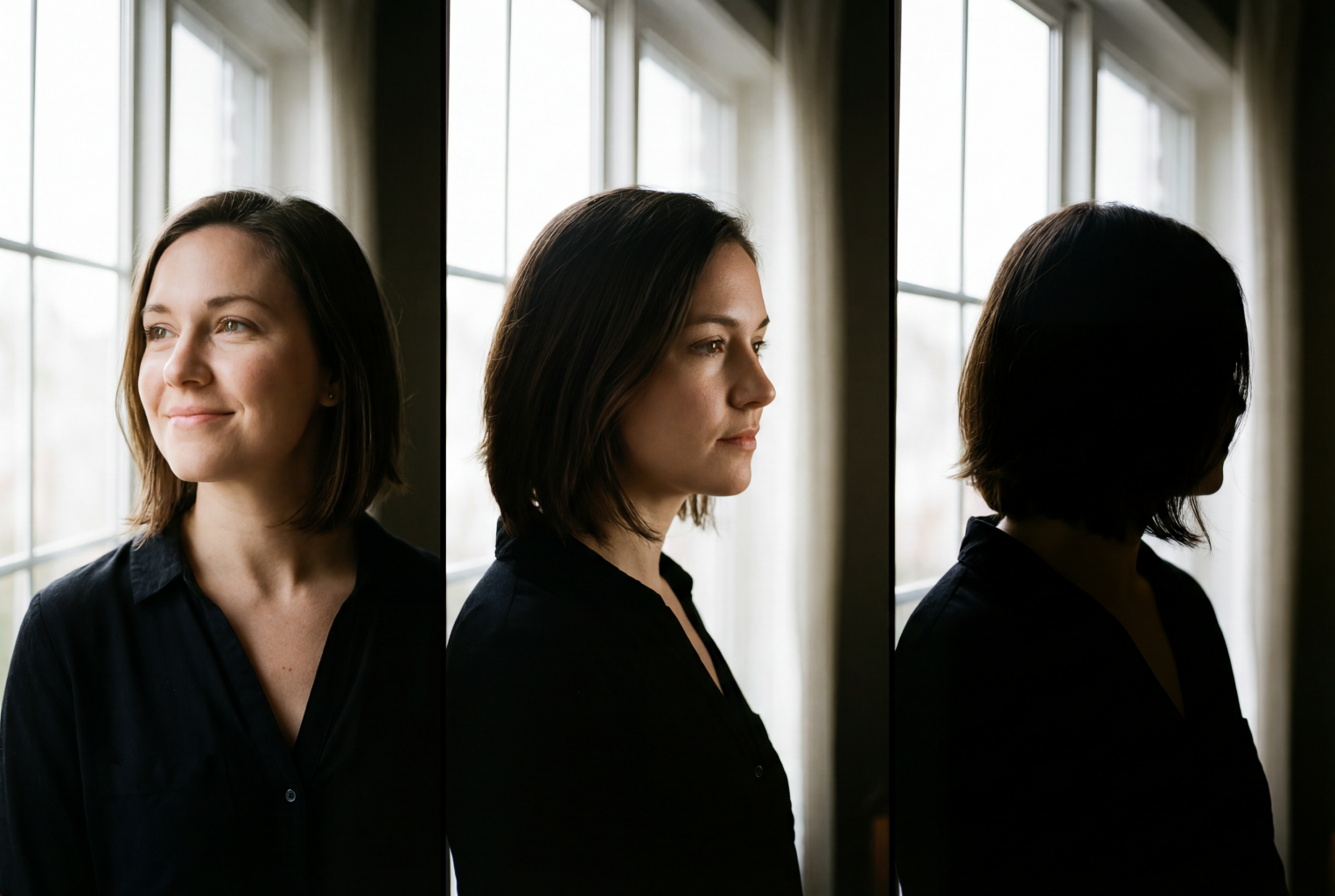
Today, do this:
- Stand in front of a window
- Turn slowly in a circle
- Watch how the light changes on your face
Notice:
- when your skin looks smooth
- when your eyes catch light
- when shadows become harsh
- when you look tired vs vibrant
This is how professionals “read” light.
You’ll start doing it automatically in a few days.
⭐ 7. Quick Lighting Rules to Remember
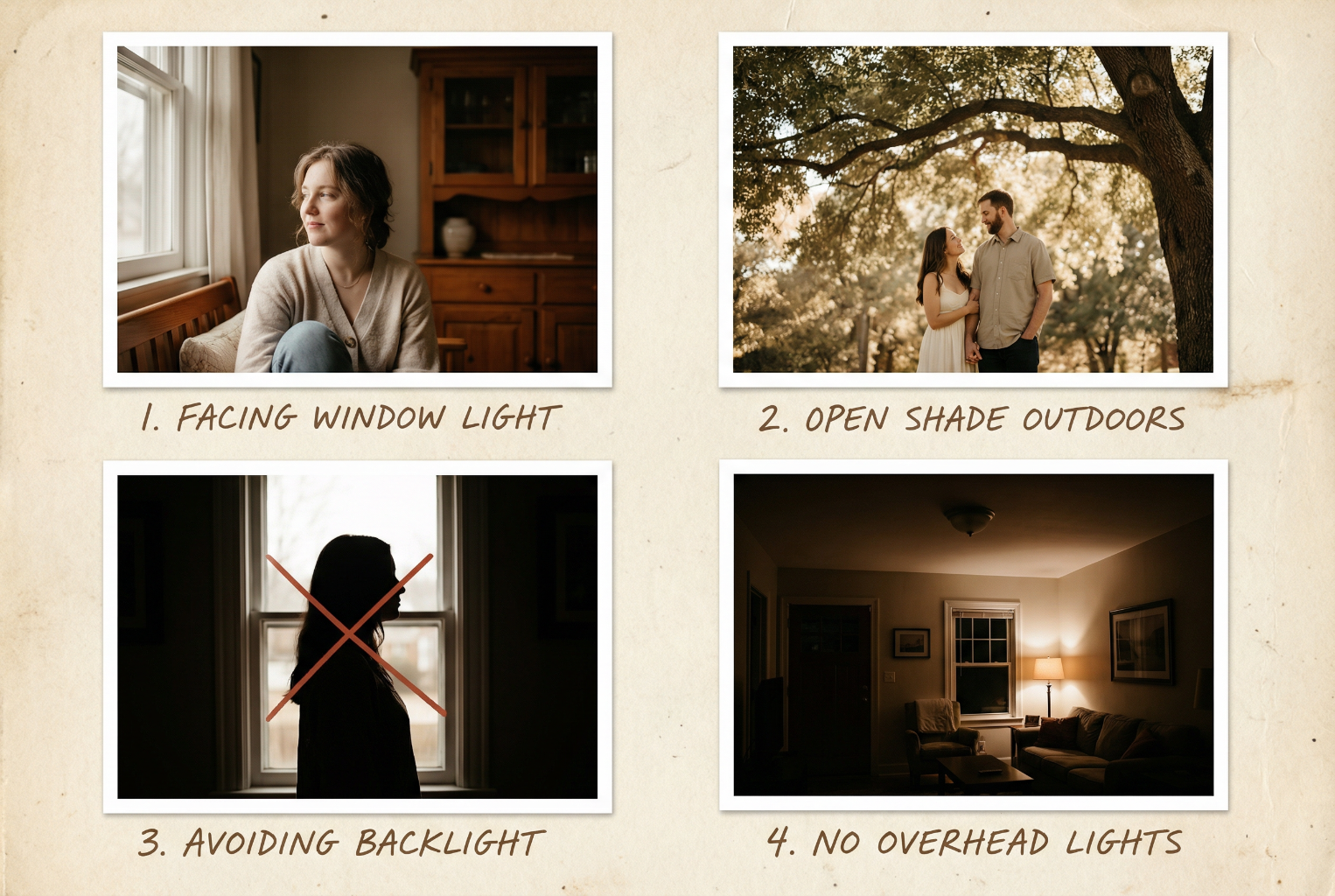
✔ Face the light
✔ Avoid strong light from behind
✔ Use windows whenever possible
✔ Cloudy days are your best friend
✔ Move into open shade outdoors
✔ Turn off overhead downlights for portraits
✔ Watch the shadows — they reveal everything
Pin these rules inside your mind.
They are simple, but powerful.
⭐ Summary
You don’t need expensive gear to take beautiful, natural photos.
You just need to understand how light behaves.
By choosing soft, front-facing light — especially window light — your photos will instantly look:
- clearer
- sharper
- more flattering
- more emotional
- more professional
This sets the foundation for every other lesson in this series.
⭐ Next Lesson
Lesson 2 — How to Take Sharp Photos Every Time
(A simple guide to avoiding blur, improving focus, and capturing crystal-clear images.)
⭐ Want the next lesson delivered to your inbox?
Add your signup form here once it’s ready.