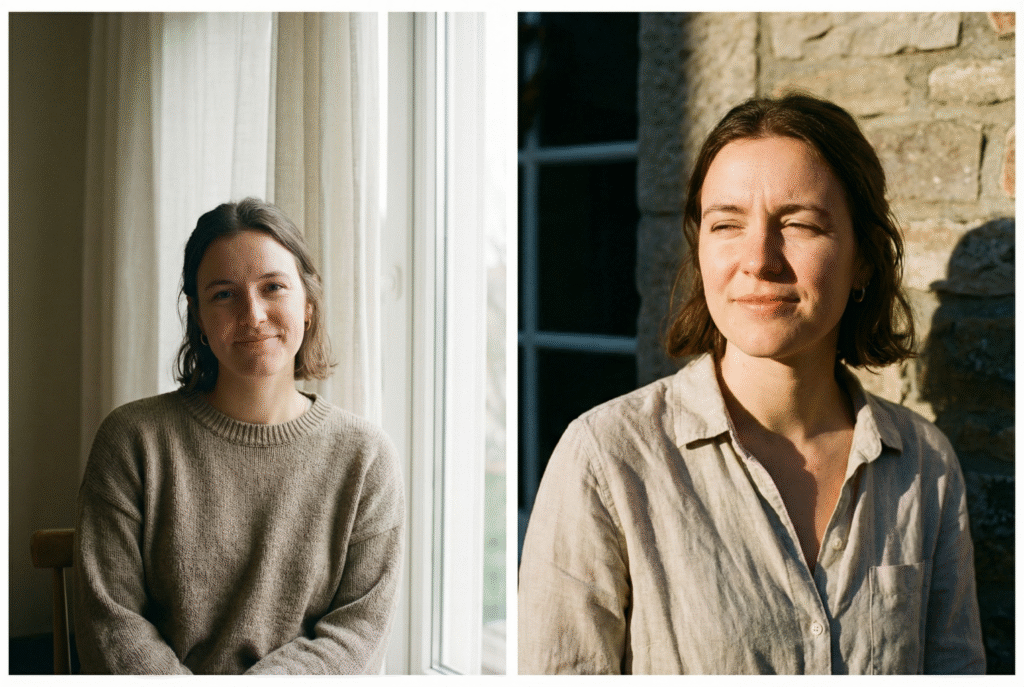
Window light is one of the most beautiful, forgiving light sources you can use — and you probably have it at home already.
Used well, it can make your photos look gently lit, calm, and professional.
⭐ Let the Window Be the Main Light
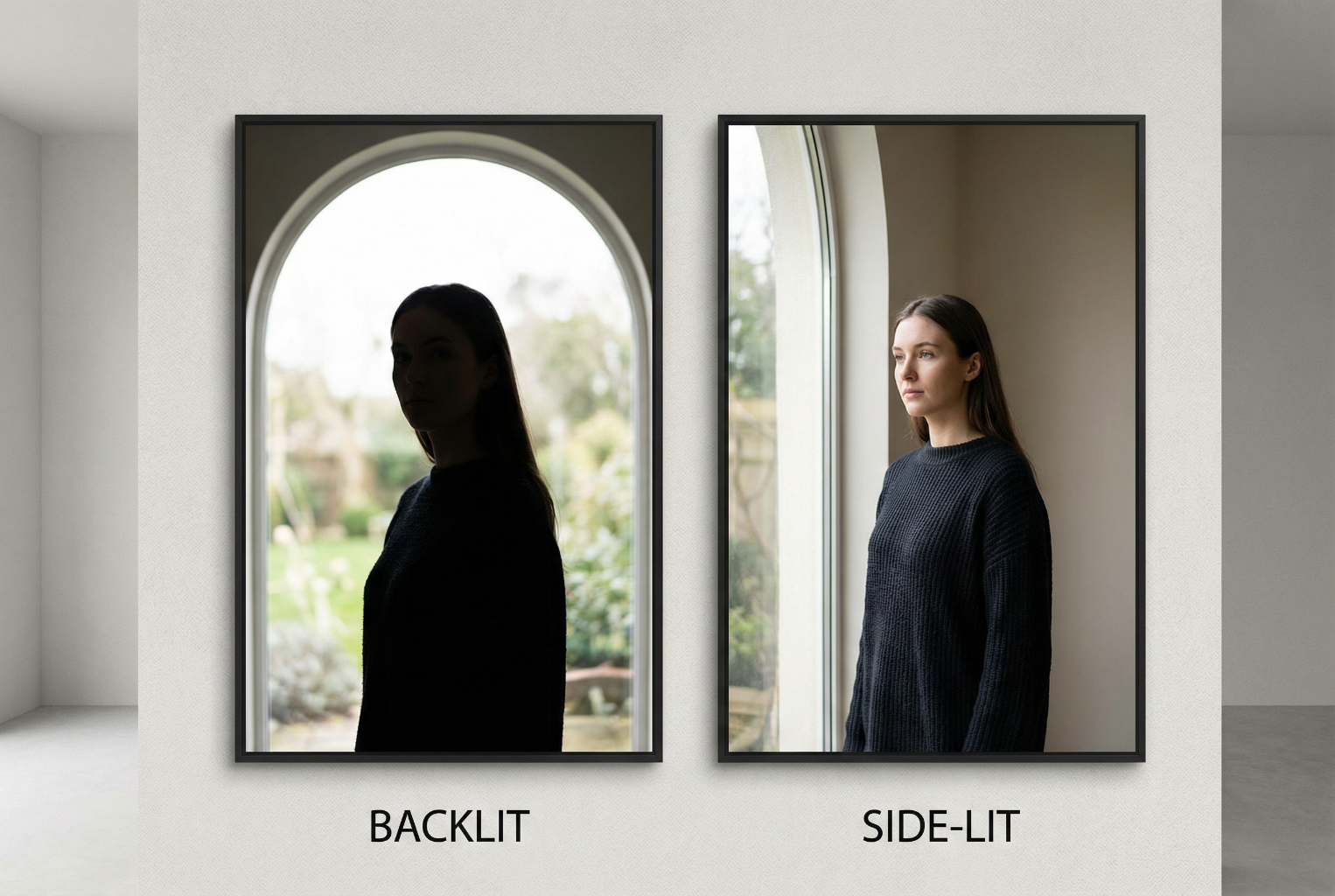
Mixed light creates problems.
Whenever possible:
• Turn off ceiling lights and lamps
• Use the window as your only light source
This avoids odd colour mixes (yellow from bulbs, blue from window) and gives you clean, soft light that flatters skin.
⭐ Position: Beside the Window, Not In It
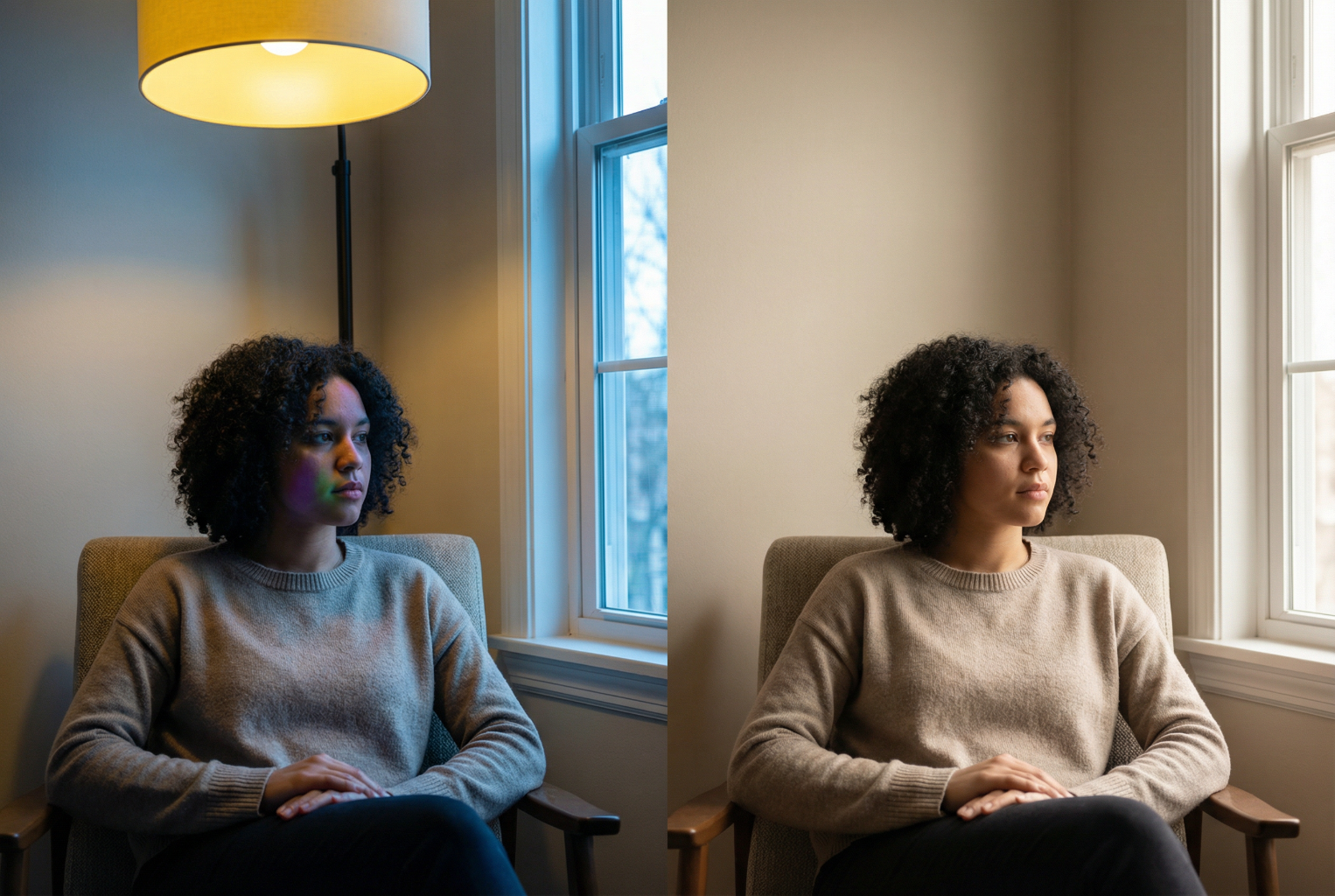
A common mistake is placing someone directly in front of the window, backlit, so their face is dark and the background is blown out.
Instead:
• Sit or stand them next to the window
• The window should be off to one side, just outside the frame
• Light should fall gently across their face from the side
This creates classic portrait lighting: bright eyes, gentle shadow on one side, lots of depth.
⭐ Angle the Face Toward the Light
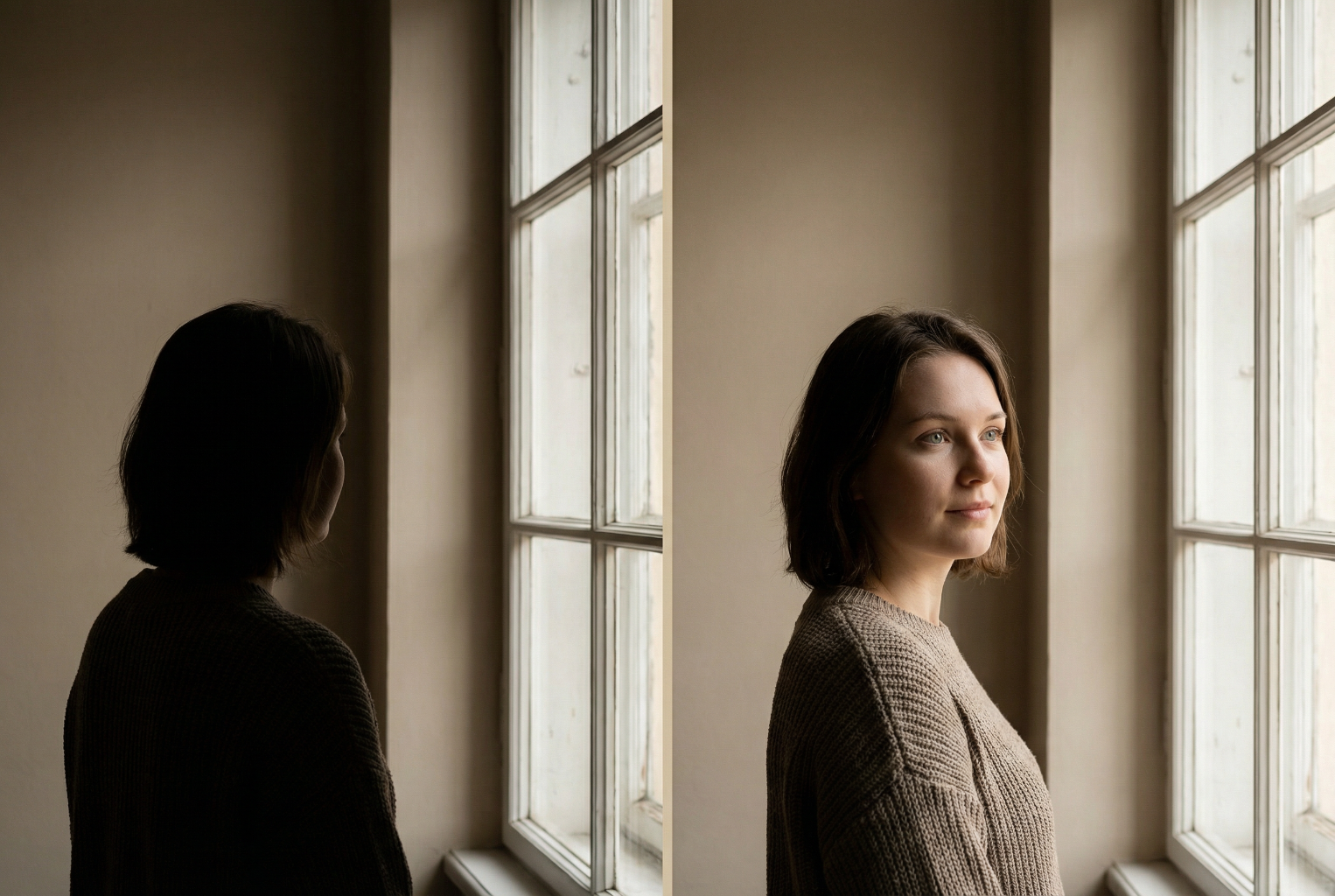
Once they’re beside the window:
Ask them to:
• Turn their body slightly away from the window
• Turn their face gently back towards the light
• Keep their gaze either at you or just past the camera
You’ll see:
• One side of the face softly brighter
• The other side gently darker, but not lost
This gives the face shape and dimension instead of flatness.
⭐ Control the Strength with Distance and Curtains
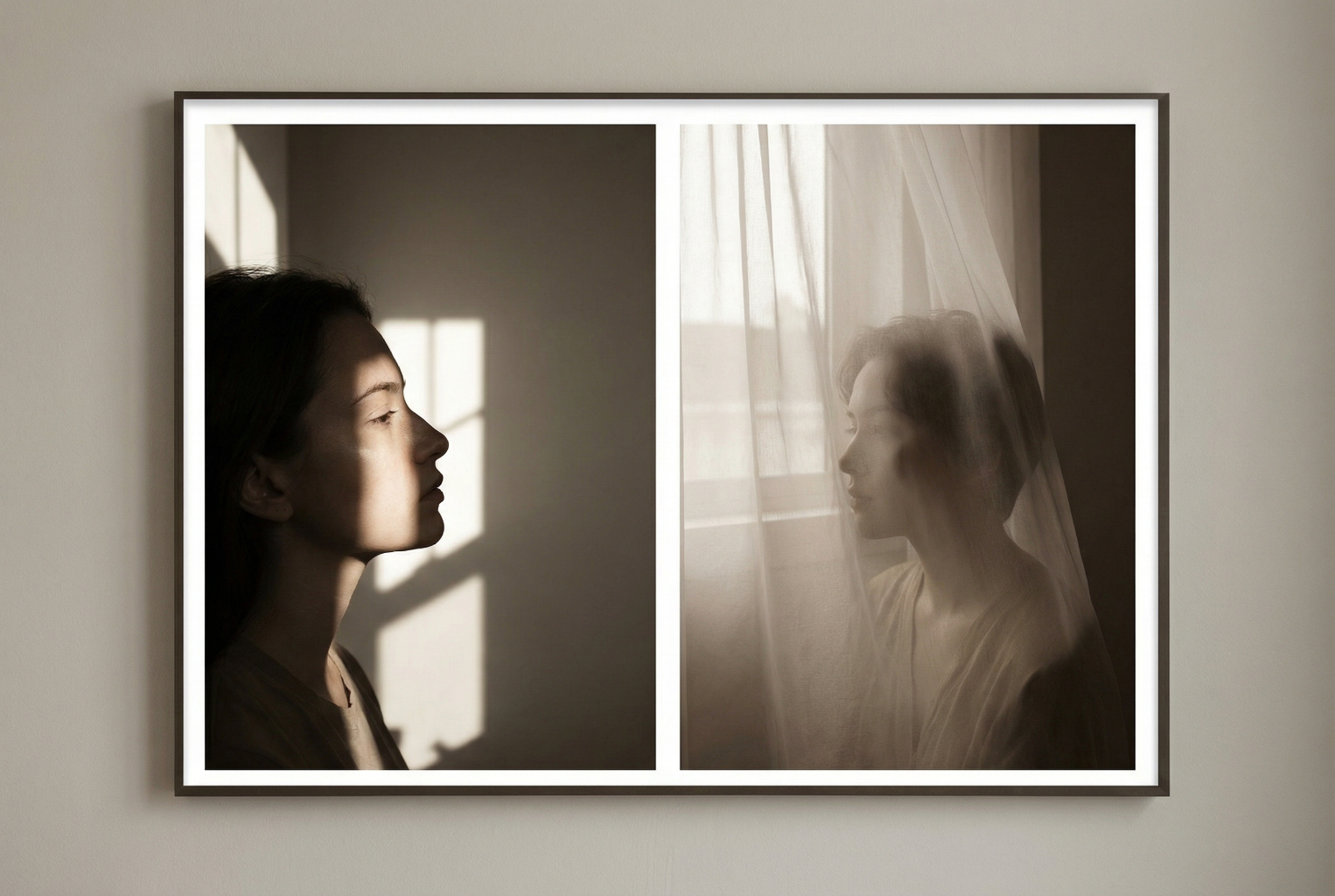
If the light is too strong:
• Move them slightly further from the window
• Or use a sheer curtain or thin white fabric to soften it
Think of it like enlarging the light source — bigger and softer = more forgiving.
If the light is too weak:
• Move them a little closer to the window
• Avoid deep corners of the room where the light drops off quickly
⭐ Check the Eyes for Catchlights
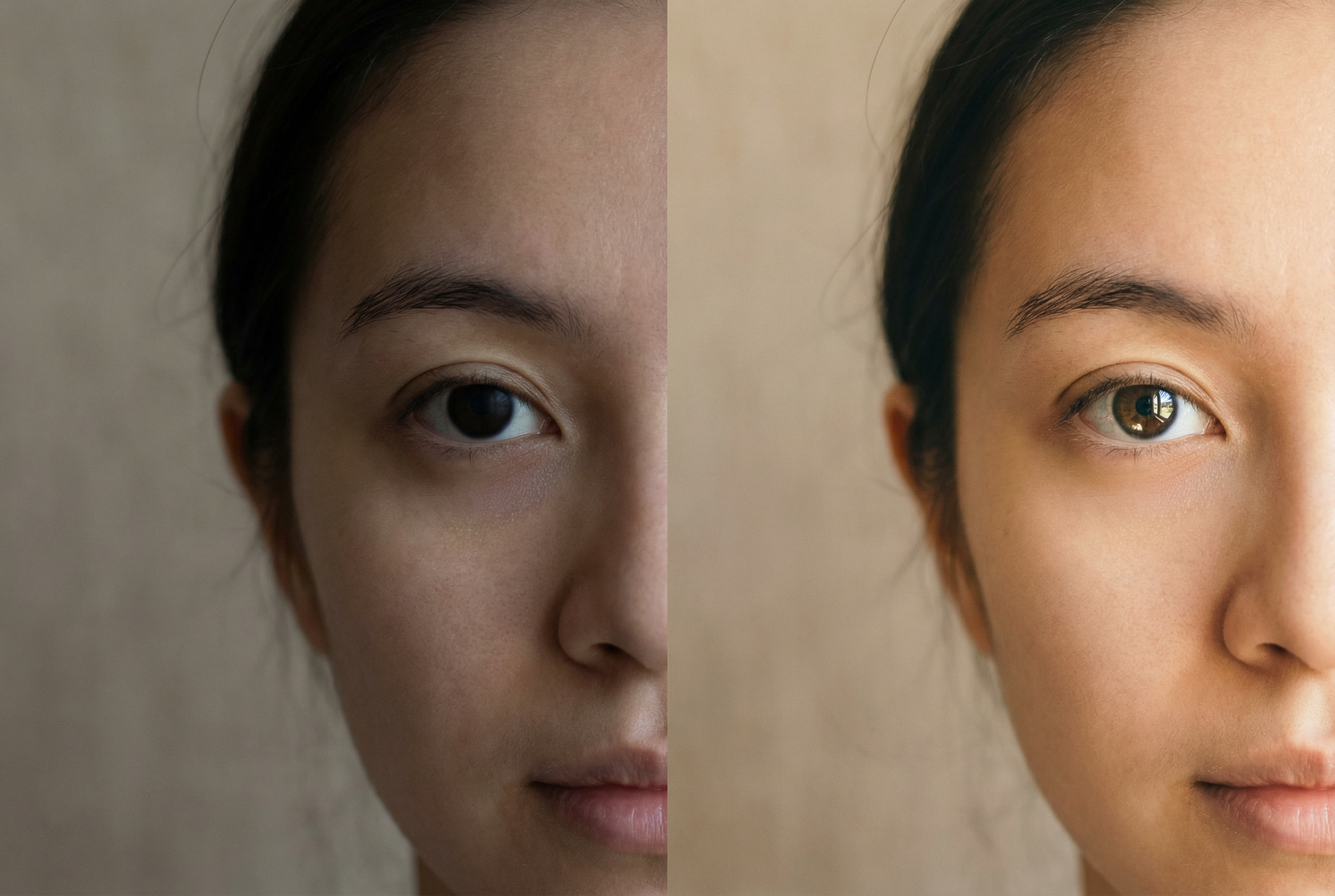
A simple way to know if your window light is working:
Look at the eyes.
• If you see a small, soft reflection (a “catchlight”) from the window, the eyes will look alive.
• If the eyes look dull and dark, adjust their position closer to or more towards the window.
Why Window Light Works So Well
Window light is big, soft, and directional — the same qualities expensive studio lights try to copy.
Once you understand where to place your subject and yourself, you’re using light the way professionals do, just with what you already have.